2 min read

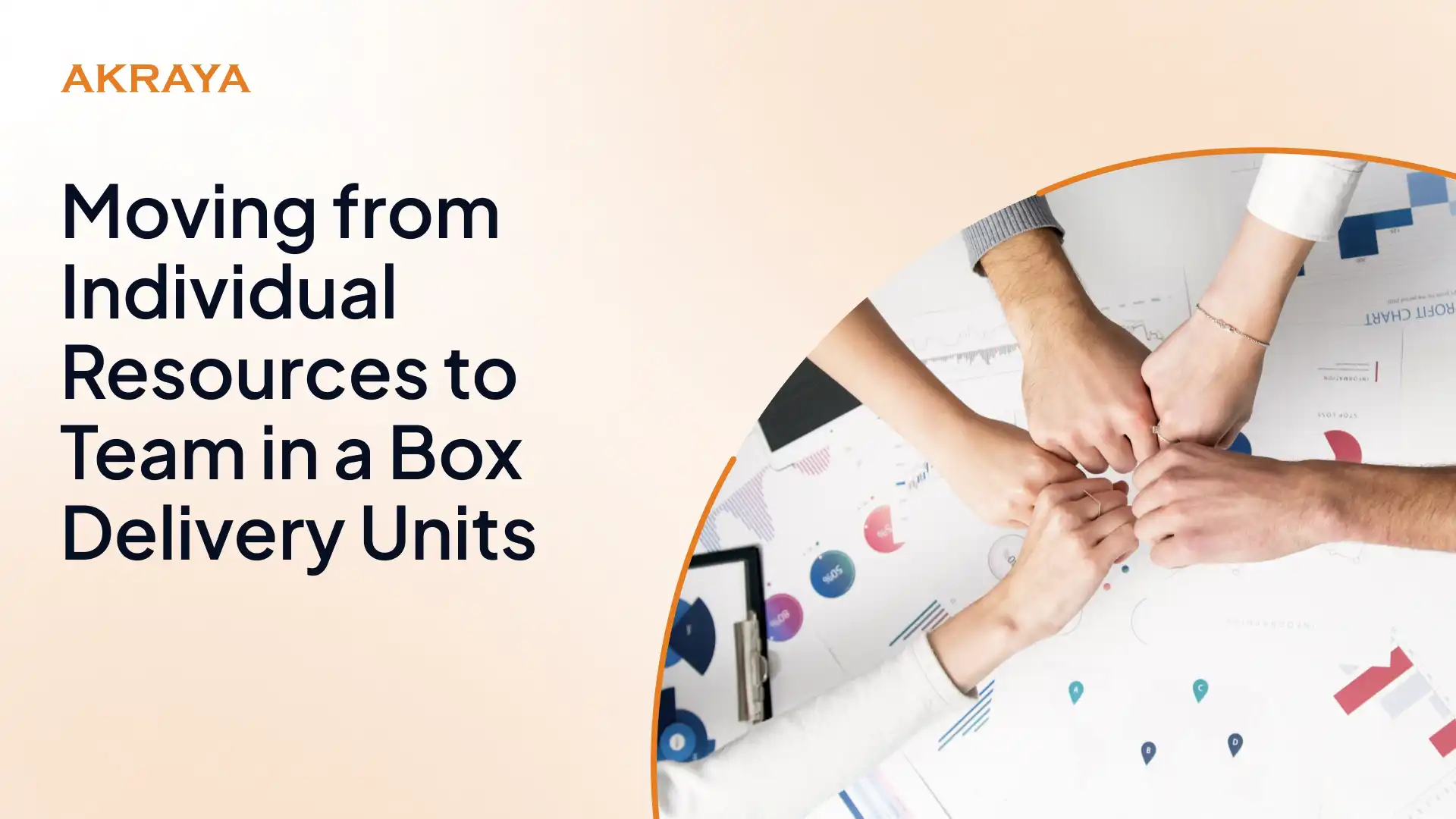
Why Enterprises Are Moving from Individual Resources to Team in a Box Delivery Units

Why Enterprises Are Moving from Individual Resources to Team in a Box Delivery Units

Why Enterprises Are Moving from Individual Resources to Team in a Box Delivery Units

For decades, enterprises scaled delivery by adding individual resources to projects. When timelines slipped, more people were added. When skills were missing, another contractor was onboarded. This model worked in slower business cycles. It does not work in today’s environment of  compressed timelines, AI acceleration, and outcome accountability.

Enterprises are now shifting toward Team in a Box delivery units. Instead of staffing isolated individuals, organizations engage fully integrated, cross functional teams aligned to outcomes, timelines,and measurable business value.

According to Gartner,organizations that structure work around product aligned teams rather than siloed functional roles are significantly more likely to achieve digital transformation goals. This structural shift reflects a broader move away from labor-based delivery toward outcome driven execution.


The Limitations of Individual Resource Augmentation

Traditional staff augmentation focuses on filling skill gaps. While this model provides flexibility, it often creates coordination challenges, fragmented accountability, and slower time to value.

SHRM research also highlights that workforce complexity increases operational friction when organizations rely heavily on contingent individual contributors without cohesive team structures. The more fragmented the delivery environment,the harder it becomes to ensure consistent quality and predictable outcomes.

In fast moving product and engineering initiatives,fragmented ownership leads to rework, communication delays, and misaligned priorities. Enterprises are recognizing that scaling headcount does not equal scaling performance.


Why Team in a Box Models Deliver Greater Predictability and Value: Top 5 Reasons Enterprises Are Making the Shift

1. Clear Accountability Reduces Delivery Risk

When enterprises hire individual contributors,accountability often becomes fragmented. If something slips, it becomes a coordination issue rather than an ownership issue.

A Team in a Box model creates shared accountability with defined ownership across engineering, QA, product, and DevOps. This reduces ambiguity and improves predictability because outcomes are owned collectively,not distributed loosely across individuals.


2. Cross Functional Alignment Accelerates Time to Value

Traditional models require internal managers to stitch together developers, testers, architects, and analysts. That orchestration takes time and introduces delays.

Team in a Box units are pre-aligned, already structured for collaboration, and ready to execute from day one. This eliminates ramp up friction and shortens the path from idea to measurable impact.


3. Built In Governance Improves Outcome Consistency  

When enterprises rely on independent contractors or isolated resources, governance becomes reactive. Metrics are tracked late and risks surface slowly.

Integrated teams operate with shared KPIs, sprint goals, and performance dashboards. This creates transparency and real time course correction. Gartner research shows that fewer than half of digital initiatives meet their intended business outcomes under traditional models, reinforcing the need for stronger delivery governance.


4. Predictable Capacity Planning and Cost Visibility

Time and material engagements often create budget unpredictability because output and effort are loosely tied.

Team based delivery aligns cost with defined outcomes and capacity planning. Enterprises gain better forecasting control because they are investing in a unit of delivery rather than loosely scoped individual effort.


5. Stronger Business Alignment and Value Focus

Individual contributors focus on tasks. High performing teams focus on outcomes.

Team in a Box model are designed around product goals, user impact, and measurable results. This ensures engineering effort stays aligned with business priorities rather than drifting into disconnected execution.


What we learned

Enterprises are no longer optimizing for headcount. They are optimizing for value delivery.

As digital initiatives become more complex and outcome driven, the limitations of individual resource models are becoming clearer.Predictability, governance, accountability, and speed now matter more than simply filling roles.

At Akraya, our Team in a Box approach is designed to help enterprises move from staffing-based execution to value based delivery. By combining cross functional expertise, structured governance, and outcome aligned performance models, we help organizations reduce risk, accelerate innovation, and achieve measurable business impact.

If your enterprise is still managing fragmented delivery across individual contributors, it may be time to rethink the model and explore a structured, accountable team-based approach.

Reach out to us today.


How can we help you today?

Case Studies

Accelerating Application Modernization for a Global Commerce Leader

Akraya transformed application infrastructure into a $900M+ revenue accelerator, enabling scalable growth and future-proofing against next-gen demands.

Case Study - Walmart Sams Club PM Staffing
Unlocking Revenue Growth for a Fortune Retailer with Talent On Demand

Akraya’s talent-on-demand strategy transformed merchandising into a predictive revenue engine, driving $8.4B in new sales and enabling the most responsive omnichannel system in the industry.

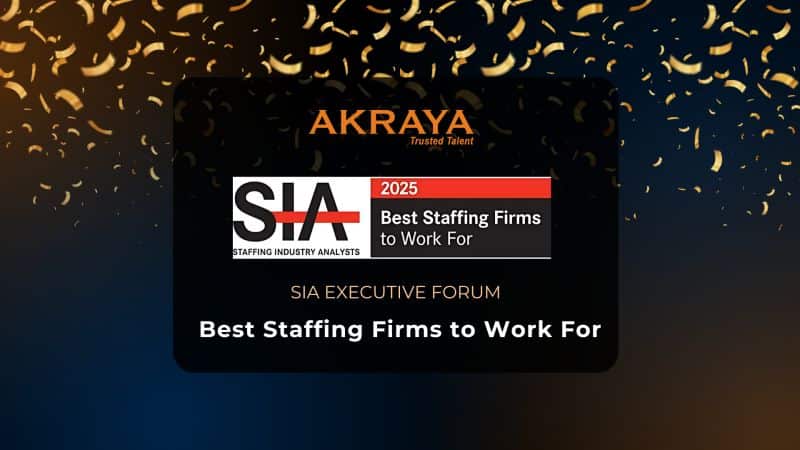
Akraya Named One of SIA’s “Best Staffing Firms to Work For” in North America

Akraya Named One of SIA’s “Best Staffing Firms to Work For” in North America

Akraya Named One of SIA’s “Best Staffing Firms to Work For” in North America! Miami Beach was buzzing with energy as the Staffing Industry Analysts...

Read More
Why UX Research Is the Secret Weapon of Successful Product Teams

Why UX Research Is the Secret Weapon of Successful Product Teams

Why UX Research Is the Secret Weapon of Successful Product Teams

Read More
Beyond Spreadsheets: How Digital Bills of Material (BOM) Management Is Transforming Supply Chain Operations

Beyond Spreadsheets: How Digital Bills of Material (BOM) Management Is Transforming Supply Chain Operations

Managing a product’s components used to be a spreadsheet battle. Now? It’s a strategic advantage. Bills of Material (BOM)—those detailed lists that...

Read More