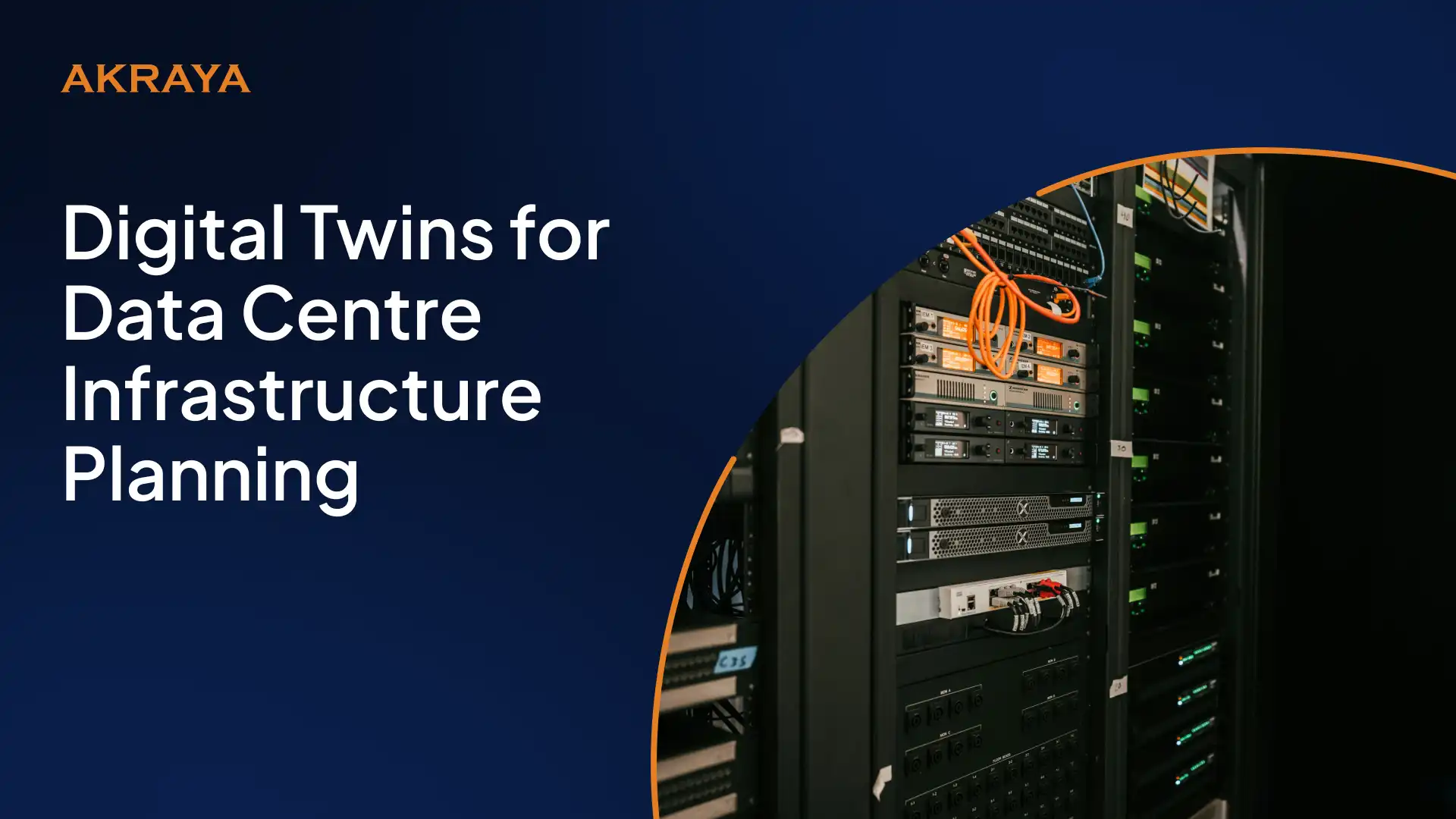
Digital Twins for Data Centre Infrastructure Planning
Data centres are the backbone of digital transformation, but planning and managing them is getting increasingly complex.
Rising energy demands, growing compute density, and the pressure to maintain near-zero downtime are pushing traditional planning methods past their limits. Static models, periodic assessments, and reactive maintenance are no longer enough.
This is where digital twins are changing the game.
A digital twin is a virtual replica of a physical data centre that simulates infrastructure, operations, and performance in real time. It lets organizations test scenarios, predict failures, and optimize systems without touching the physical environment.
And adoption is picking up fast.
According to Gartner, by 2027, over 40% of large enterprises will be using digital twins to improve operational efficiency and decision-making. Source: Gartner Newsroom
This is not an experimental trend anymore. It is becoming standard practice.
Moving from Reactive to Predictive Planning
Traditional data centre management is reactive by nature.
Teams respond to failures, troubleshoot performance issues, and adjust capacity after problems have already surfaced. That approach brings downtime risk, inefficient resource utilization, and operational costs that are hard to control.
Digital twins flip that model on its head.
By continuously pulling in data from sensors, infrastructure systems, and workloads, digital twins simulate real-world conditions and flag potential issues before they become actual problems. Whether it is overheating, power imbalance, or capacity constraints, teams can act ahead of the issue rather than scrambling after it.
The result is less risk and stronger reliability at scale.
Optimizing Capacity and Resource Utilization
One of the most persistent challenges in data centre planning is matching capacity to demand.
Over-provisioning wastes resources and inflates costs. Under-provisioning leads to performance degradation and service disruptions. Neither is acceptable.
Digital twins make capacity planning far more precise.
By simulating different workload scenarios, organizations can see exactly how their infrastructure will behave under varying conditions. That allows them to optimize server utilization, cooling systems, and power distribution without relying on estimates and gut feel.
According to McKinsey & Company, advanced simulation and digital modeling can help reduce infrastructure costs by up to 20% while improving efficiency and performance. Source: McKinsey & Company, Operations Insights
Improving Energy Efficiency and Sustainability
Energy consumption is one of the most pressing concerns in data centre operations today.
With tightening regulations and growing sustainability commitments, organizations need to reduce energy usage without sacrificing performance. That balance is difficult to strike without the right visibility.
Digital twins provide that visibility at a granular level.
They can simulate the impact of different cooling strategies, hardware configurations, and workload distributions to find the most energy-efficient path forward. Organizations can reduce their carbon footprint while keeping operations running at full capacity.
As data centres continue to scale, this capability moves from being a nice-to-have to an operational necessity.
Enabling Scenario Testing Without Risk
Infrastructure changes in data centres are high stakes.
Even minor adjustments can trigger unexpected disruptions downstream. Teams often hold back on changes simply because the risk of getting it wrong is too high.
Digital twins remove that barrier by letting teams test changes in a virtual environment before anything happens in the real world. Adding new hardware, reconfiguring systems, scaling capacity, all of it can be validated in advance. Teams can move forward with confidence rather than caution.
Bridging IT and Operations
Data centre management typically involves multiple teams: IT, facilities, operations, and engineering. When those functions are not aligned, planning slows down and execution suffers.
Digital twins serve as a shared platform that gives everyone a unified view of infrastructure and performance. That common ground improves collaboration, reduces miscommunication, and leads to faster and better-informed decisions across the board.
The Road Ahead
Digital twins are not just a visualization tool. They are becoming a core capability for modern infrastructure planning.
As data centres grow more complex, the ability to simulate, predict, and optimize in real time will separate organizations that operate efficiently from those that are constantly putting out fires.
The organizations that invest in digital twins now will be better positioned on efficiency, reliability, and sustainability. Those who stick with traditional planning methods will find it harder to keep pace.
Akraya
At Akraya, we help organizations design and implement advanced infrastructure solutions, including digital twin capabilities for data centre planning. By combining deep domain expertise with emerging technologies, we enable smarter, more efficient, and future-ready operations.
If you are looking to modernize your infrastructure strategy, let's connect.
How can we help you today?
Case Studies
Accelerating Application Modernization for a Global Commerce Leader
Akraya transformed application infrastructure into a $900M+ revenue accelerator, enabling scalable growth and future-proofing against next-gen demands.
Unlocking Revenue Growth for a Fortune Retailer with Talent On Demand
Akraya’s talent-on-demand strategy transformed merchandising into a predictive revenue engine, driving $8.4B in new sales and enabling the most responsive omnichannel system in the industry.