Why UX Research Is the Secret Weapon of Successful Product Teams
Staffing procurement has traditionally relied on manual processes, fragmented data, and reactive decision-making. Vendor selection, candidate evaluation, and contract management often relied on spreadsheets, email, and historical relationships.
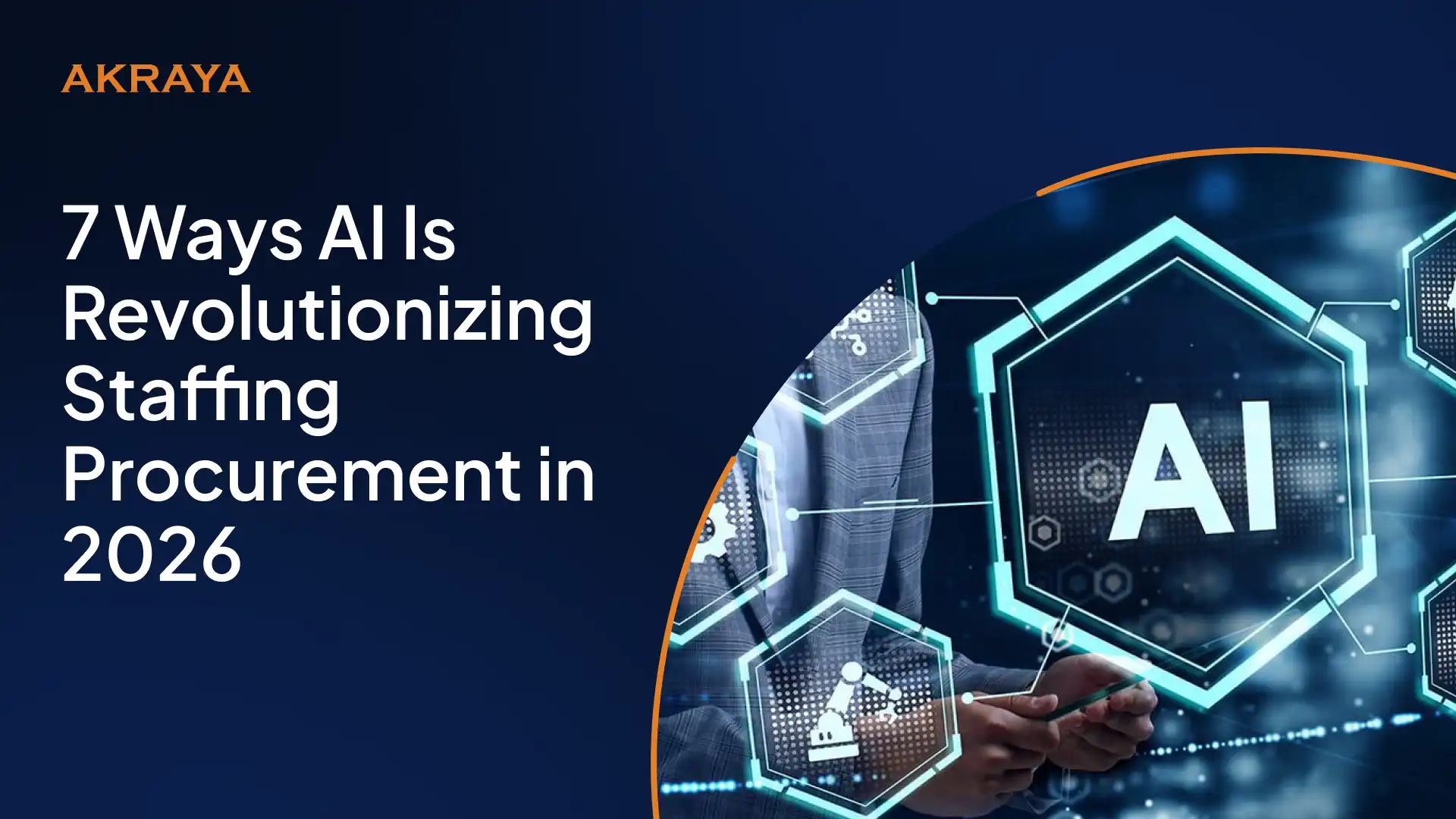
Artificial intelligence is beginning to reshape this landscape. Global spending on artificial intelligence is forecast to reach $2.52 trillion in 2026, reflecting rapid enterprise investment in AI platforms, services, and infrastructure that support data-driven decision making
In 2026, AI-powered tools are transforming how organizations evaluate suppliers, source talent, manage workforce data, and optimize procurement decisions.
Instead of operating as an administrative function, staffing procurement is evolving into a data-driven strategic capability.
Below is seven ways AI is transforming staffing procurement across enterprise organizations.
1. Smarter Vendor Selection
AI platforms can analyze supplier performance across multiple dimensions, including fill rates, time to submit, candidate quality, and compliance metrics.
By aggregating this data across engagements, procurement teams gain objective insights into which vendors consistently deliver the strongest results.
This enables organizations to move beyond relationship-based decisions and toward performance-based supplier management.
2. Faster Candidate Matching
Machine learning algorithms are improving how candidate profiles are matched to open roles.
AI systems can evaluate experience, skills, certifications, and historical placement data to identify candidates who closely align with job requirements. This reduces screening time and allows recruiters and procurement teams to focus on higher-value evaluation activities.
As matching accuracy improves, organizations can fill roles faster while improving candidate fit.
3. Predictive Workforce Planning
AI-driven analytics allow organizations to anticipate talent demand before hiring requests are formally submitted.
By analysing project pipelines, historical hiring trends, and market availability data, AI models can forecast workforce needs and recommend proactive sourcing strategies.
Enterprise technology investment is continuing to accelerate, with worldwide IT spending expected to reach $6.15 trillion in 2026, highlighting the scale of digital initiatives that increasingly rely on data-driven workforce planning and talent procurement strategies.
This helps procurement teams avoid last-minute hiring cycles and reduce the risk of project delays.
4. Automated Compliance Monitoring
Managing compliance across contingent workforce programs can be complex, especially for organizations operating across multiple regions.
AI systems can continuously monitor vendor contracts, worker classifications, onboarding documentation, and regulatory requirements. Automated alerts help procurement teams identify potential risks before they escalate into compliance issues.
This strengthens governance and reduces administrative burden.
5. Real-Time Market Intelligence
AI-powered talent intelligence platforms provide procurement teams with insights into compensation trends, skill availability, and geographic hiring patterns.
Access to real-time labor market data helps organizations design competitive rate cards, adjust hiring strategies, and engage vendors more effectively.
This improves both cost management and hiring success rates.
6. Performance-Based Vendor Management
Traditional vendor scorecards often rely on periodic reviews and static metrics.
AI enables continuous performance tracking across vendor networks. Procurement teams can analyze trends in candidate submissions, interview success rates, retention outcomes, and project delivery performance.
This level of transparency allows organizations to reward high-performing vendors and refine supplier ecosystems over time.
7. Strategic Procurement Decision Making
Perhaps the most important shift is the role AI plays in elevating procurement strategy.
Instead of focusing primarily on administrative coordination, procurement leaders can use AI-generated insights to guide workforce strategy, vendor optimization, and cost management decisions.
The result is a more proactive and data-driven procurement function.
Enterprise leaders are rapidly prioritizing artificial intelligence, with many organizations allocating at least 5% of their capital budgets to AI initiatives as they modernize operations and workforce strategies.
Artificial intelligence is transforming staffing procurement from a transactional process into a strategic capability.
Organizations that embrace AI-driven insights can make faster decisions, strengthen vendor ecosystems, and build more resilient workforce strategies.
As technology continues to evolve, the role of procurement in talent acquisition will become increasingly analytical, predictive, and outcome-focused. Reach out to us today.
Akraya transformed application infrastructure into a $900M+ revenue accelerator, enabling scalable growth and future-proofing against next-gen demands.
Akraya’s talent-on-demand strategy transformed merchandising into a predictive revenue engine, driving $8.4B in new sales and enabling the most responsive omnichannel system in the industry.
Why UX Research Is the Secret Weapon of Successful Product Teams
RaaS for Product Market Fit: Using Research to Validate New Product Ideas Quickly Why Product Market Fit Has Become Harder to Achieve
AI Powered Digital Twins: The Self-Correcting Supply Chains Cutting Recovery Time by 28 Percent